
Sipchem halts EVA production in Jubail due to feedstock shortage
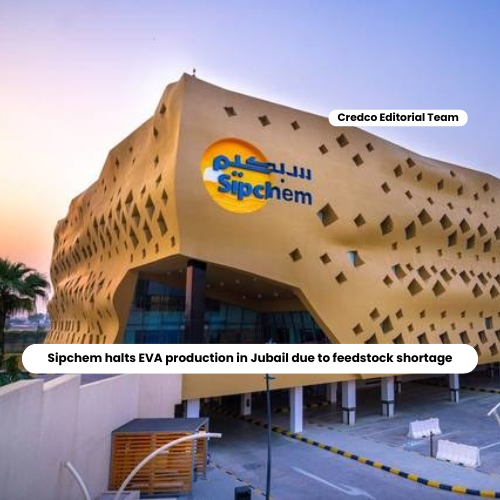
The facility, which has an annual production capacity of 200,000 tons, is expected to remain offline until May 2026. The shutdown comes amid ongoing supply challenges affecting feedstock availability in the region.
The disruption is likely to impact EVA supply in the market, with participants closely monitoring the situation for any changes in timelines or supply conditions.
Stay ahead of market trends with the Credco app. For any queries, please reach out via WhatsApp at +91 8448083211.
Related on the Wire
- Supply·Friday, 23 October 2026
Asian Ethylene Prices Extend Gains on Higher Feedstock Costs and Tight Supply
Asian ethylene prices continued to strengthen this week, with assessments for both CFR China and CFR Southeast Asia increasing by $10/ton from the previous week. Rising crude oil and naphtha costs, active buying by traders and persistent supply constraints supported the market…
Read story - Polymer·Saturday, 5 September 2026
China PE Prices Near Earlier War-Driven Highs as Feedstock Costs and Futures Rally
China’s domestic PE market has strengthened significantly in recent weeks, pushing LDPE and LLDPE film prices to within around $15/ton of their previous war-driven peaks. Higher crude oil and ethylene costs, combined with a strong rise in Dalian LLDPE futures, have given selle…
Read story - Markets·Saturday, 5 September 2026
Asian ABS Prices Climb on Surging Feedstock Costs Despite Weak Seasonal Demand
Asian ABS markets moved sharply higher this week as renewed strength in crude oil and significant increases in all three key monomers intensified production-cost pressure. Prices increased across China and Southeast Asia, with China's domestic market recording particularly str…
Read story - Polymer·Friday, 23 October 2026
Rising Costs Weaken China’s PP and PE Export Competitiveness
China’s position as a key supplier helping Southeast Asia cope with polyolefin supply disruptions has shifted significantly since the US-Iran conflict began earlier this year. Initially, Chinese producers helped replace some of the Middle Eastern volumes lost to disrupted ship…
Read story